

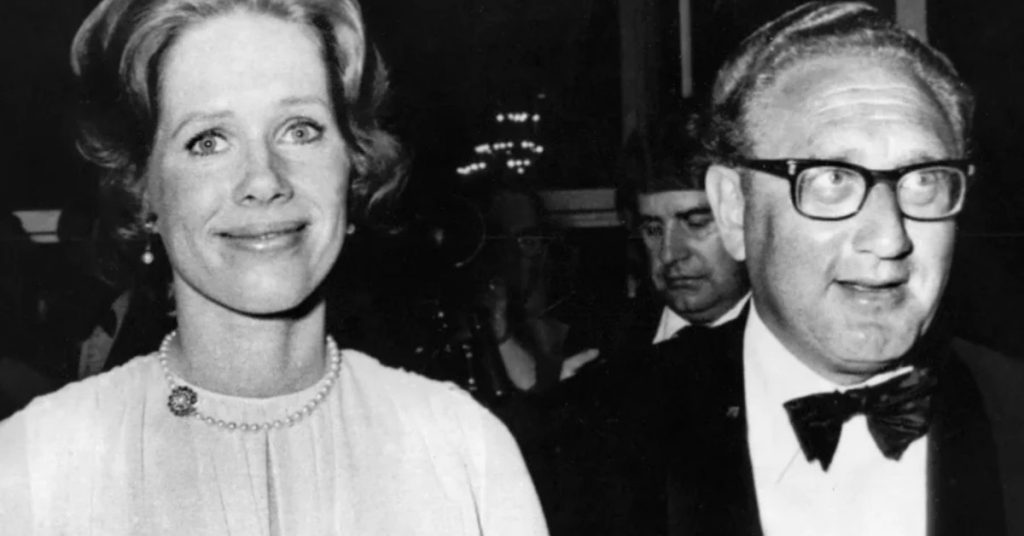
Ann Fleischer is often remembered as the first wife of the influential American diplomat Henry Kissinger, yet her story extends far beyond that association. Born on November 6, 1925, in Fürth, Germany, she experienced the turmoil of Nazi persecution and became part of the wave of Jewish refugees who rebuilt their lives in the United States. Her journey reflects resilience, adaptability, and quiet determination shaped by wartime displacement and the immigrant experience.
Throughout her life, Ann Fleischer remained a composed and private individual who provided stability and intellectual companionship during the early academic years of Kissinger’s career while raising a family and navigating profound personal transitions with dignity.
who is Ann Fleischer
Ann Fleischer is best known historically as the Henry Kissinger first wife, but her story extends far beyond that connection. She was a German-American woman whose life journey reflects the broader immigrant story of many Jewish families displaced by the turmoil of twentieth-century Europe.
Born November 6 1925 in Fürth Germany, Fleischer grew up in a Jewish family during a period when political changes in the country increasingly threatened Jewish communities. Her early years were shaped by the rise of Nazism, which forced countless Jewish families to flee their homes. As a Nazi Germany refugee, Fleischer’s early life was defined by wartime displacement and the struggle to rebuild a future in a new country.
After emigrating to the United States, she became part of the larger narrative of post-war America, where many European immigrants sought stability, education, and opportunity. Over time, she built a life characterized by independence and resilience. Although she remained a private individual, Fleischer’s connection to Henry Kissinger placed her within the orbit of influential political and academic circles.
In modern discussions, searches like Ann Fleischer biography, Ann Fleischer children, or Ann Fleischer Fürth Germany reflect a growing curiosity about her personal story. Her life represents the intersection of immigration history, Jewish heritage, and the personal side of diplomatic history.
Early Life and Background
Childhood in Fürth and Jewish Heritage
Ann Fleischer’s early life began in Fürth Germany, a Bavarian city with a long history of Jewish culture and community. Being born November 6 1925, she spent her childhood during a time when Germany was undergoing dramatic political change. Her Jewish heritage placed her family in increasing danger as Nazi policies intensified during the 1930s.
Like many young people who became part of the Jewish exile Germany narrative, Fleischer experienced the upheaval of leaving her homeland at an early age. The displacement caused by Nazi persecution forced countless Jewish families to abandon their homes, careers, and cultural roots. This experience shaped her identity and fostered the resilience that later defined her character.
When Fleischer arrived in the United States, she joined the growing population of European immigrants rebuilding their lives after war and persecution. Her immigrant story reflects the broader transformation of American society during the mid-twentieth century, when refugee families contributed to academic, cultural, and professional communities.
Several factors shaped her early development:
- Exposure to political instability in Europe
- The experience of fleeing persecution
- Adjustment to American society and culture
- The importance of education and intellectual environments
These experiences cultivated a composed and intelligent personality. Friends and acquaintances often described her as thoughtful, observant, and emotionally grounded. Her upbringing in challenging circumstances helped form the quiet strength that would later support her family and influence those around her.
Meeting Henry Kissinger
A Partnership Formed in Academic Circles
Ann Fleischer’s life took a significant turn when she met Henry Kissinger, a German-born American political scientist who would later become one of the most influential figures in modern U.S. foreign policy. Kissinger, like Fleischer, was also a Jewish refugee from Germany, and their shared background created an immediate cultural and emotional connection.
Their meeting occurred during a period when Kissinger was establishing himself academically in the United States. He eventually became associated with Harvard University, where his work as a political scientist began attracting attention. The intellectual environment surrounding Harvard brought together scholars, students, and thinkers who were shaping global policy debates.
During this time, Fleischer became more than simply a spouse. Observers often describe her as an academic partner who provided emotional and intellectual support during the early years of Kissinger’s career. Her presence contributed to the domestic stability that allowed him to focus on scholarship and research.
The partnership between Fleischer and Kissinger included several important elements:
- Shared immigrant experiences from Germany
- Mutual understanding of Jewish refugee identity
- Support during the demanding academic years
- Intellectual companionship within scholarly circles
Although she remained outside the public spotlight, Fleischer’s stabilizing presence helped create a supportive environment for a rising scholar. In this sense, she played a subtle but meaningful role in the personal life of a future diplomat.
Marriage and Family Life
The Fifteen-Year Marriage
Ann Fleischer and Henry Kissinger married during the early stage of his academic career. Their fifteen-year marriage represented a period when Kissinger transitioned from a young scholar to a recognized political thinker. Throughout this time, Fleischer maintained a life focused on family and private responsibilities rather than public recognition.
As the spouse of a rising intellectual connected with Harvard University, Fleischer became a diplomat spouse figure long before Kissinger entered formal government roles. Her role involved maintaining family stability while navigating the social expectations of academic communities.
During their marriage, the couple had two children:
- Elizabeth Kissinger
- David Kissinger
The presence of children added depth to Fleischer’s role within the family. She balanced motherhood with the responsibilities of supporting a husband whose career required extensive intellectual work and professional networking.
| Aspect | Details |
| Marriage duration | Fifteen-year marriage |
| Children | Elizabeth Kissinger, David Kissinger |
| Social environment | Academic circles around Harvard University |
| Public visibility | Mostly private and low-profile |
Divorce and New Beginnings
The marriage between Ann Fleischer and Henry Kissinger eventually ended when the couple divorced 1964. This moment marked a turning point not only in their personal lives but also in their individual paths. By this time, Kissinger’s career trajectory was expanding rapidly within academic and policy circles.
For Fleischer, the divorce represented an opportunity to redefine her life independently. Many biographical searches today focus on topics such as Ann Fleischer Kissinger divorce and Ann Fleischer second marriage, reflecting curiosity about how her life evolved afterward.
Following the separation, Fleischer later married Saul G. Cohen, a respected scholar known for his work in political geography. Cohen served as a Brandeis University professor, which placed Fleischer once again within an intellectually active environment.
Her second marriage demonstrated her continued connection to academic communities. Rather than retreat from intellectual life, Fleischer maintained relationships with scholars and thinkers who shaped modern discussions of geopolitics and global affairs.
This new phase of her life showed several defining qualities:
- Self-reliant decision-making after divorce
- Continued involvement in academic environments
- Emotional independence and personal growth
- A commitment to living privately despite historic connections
These qualities reinforced the perception of Fleischer as someone who possessed both endurance and integrity, navigating personal transitions with quiet confidence.
Character and Influence
Quiet Strength Behind Public Figures
Although Ann Fleischer rarely appeared in headlines, her influence can be understood through the roles she played in the lives of prominent intellectuals and policymakers. During her marriage to Henry Kissinger, she functioned as a stabilizing presence while he pursued a demanding academic career.
Later, Kissinger would become a major figure in American diplomacy and receive the Nobel Peace Prize, making him a globally recognized Nobel Peace Prize laureate wife in historical context. Even though their marriage ended before the peak of his political career, Fleischer’s early support formed part of the personal foundation of his life.
Observers often describe Fleischer with character traits such as:
- Quiet strength
- Resilience
- Composed and intelligent demeanor
- Grace and dignity
- Private strength
These traits allowed her to maintain balance during times when the people around her were engaged in high-pressure intellectual and political environments. As a diplomat spouse figure in earlier years, she contributed to emotional grounding and domestic stability.
Her influence was subtle but meaningful. Rather than public speeches or policy work, her impact came through personal relationships and support structures. This type of influence is often overlooked in historical narratives, yet it plays a crucial role in shaping the lives of public figures.
Later Life and Legacy
A Life of Privacy and Longevity
In later years, Ann Fleischer continued living largely outside the spotlight. Unlike many individuals connected to political or diplomatic figures, she maintained her identity as a private individual. This choice reflected her personality—reserved, thoughtful, and focused on personal relationships rather than public attention.
As of modern biographical references, she has reached 99 years old, making her life span an extraordinary witness to many major historical periods. Her lifetime has encompassed:
- The rise of Nazi Germany
- Jewish refugee migration to America
- Post-war academic and political transformations
- The development of modern U.S. foreign policy
Through these eras, Fleischer’s story remains rooted in resilience and adaptation. Her journey from Jewish exile Germany to a life in the United States illustrates the broader experience of displaced European Jews who built new futures abroad.
Even though she was connected to influential figures, Fleischer’s legacy lies in the qualities she embodied:
- Endurance and integrity
- Emotional grounding for family members
- Intellectual companionship within academic environments
- Commitment to privacy and independence
Her story reminds readers that history is shaped not only by famous leaders but also by the people who quietly support them.
Conclusion
Ann Fleischer’s life represents a remarkable combination of resilience, dignity, and understated influence. Born November 6 1925 in Fürth Germany, she experienced the upheaval of being a Nazi Germany refugee before establishing a new life in the United States. Her fifteen-year marriage to Henry Kissinger placed her near the center of academic and political circles, where she served as a stabilizing presence during the early stages of a future diplomat’s career.
Following their divorce in 1964, Fleischer demonstrated independence by building a new life and later marrying Saul G. Cohen, a respected Brandeis University professor. Throughout every stage of her journey—from refugee childhood to family life and later years—she embodied quiet strength, grace and dignity, and unwavering resilience.


